

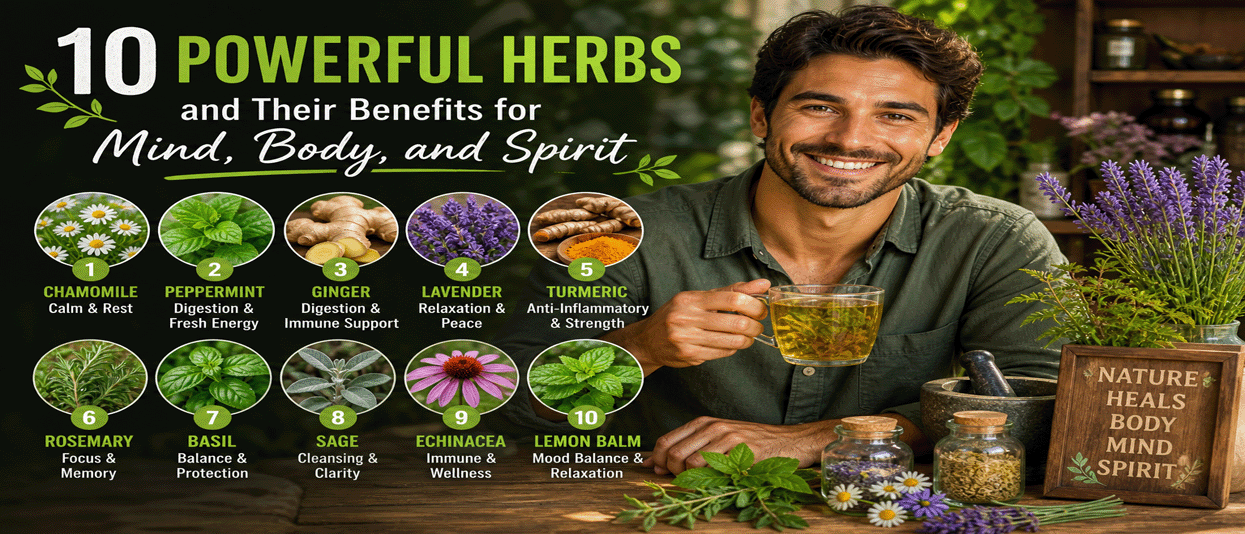
Herbs have always held a special place in human wellness. They are used in teas, foods, oils, baths, rituals, and natural remedies to support the mind, body, and spirit. From calming chamomile to energizing rosemary, herbs offer a beautiful connection between nature and everyday health.
While herbs should not replace medical care, many people use them as part of a balanced lifestyle to support relaxation, digestion, immunity, focus, emotional balance, and spiritual cleansing.
1. Chamomile: The Herb of Calm and Rest
Chamomile is one of the most popular herbs for relaxation. Often enjoyed as an evening tea, chamomile may help support calmness and a peaceful bedtime routine.
Best for: relaxation, sleep support, emotional balance, gentle comfort.
2. Peppermint: The Cooling Digestive Herb
Peppermint is refreshing, uplifting, and commonly used after meals. Its cooling qualities make it a favorite herb for digestive comfort and mental freshness.
Best for: digestion, bloating support, fresh energy, clarity.
3. Ginger: The Warming Wellness Herb
Ginger is bold, spicy, and powerful. It has been used for generations to support digestion, circulation, and seasonal wellness. Ginger tea is especially popular during cold weather.
Best for: digestion, warmth, nausea support, immune wellness.
4. Lavender: The Herb of Peace and Protection
Lavender is loved for its calming scent and beautiful purple flowers. It is often used in teas, oils, sachets, and spiritual cleansing practices.
Best for: stress relief, relaxation, sleep rituals, peaceful energy.
5. Turmeric: The Golden Herb of Strength
Turmeric is known for its bright golden color and earthy flavor. It contains curcumin, a natural plant compound often associated with antioxidant and inflammation-supporting properties.
Best for: joint support, antioxidant wellness, vitality, golden milk.
6. Rosemary: The Herb of Memory and Focus
Rosemary has a strong, earthy aroma and has long been linked with memory, protection, and mental clarity. It is also a powerful kitchen herb used in many savory dishes.
Best for: focus, memory support, cooking, cleansing energy.
7. Basil: The Herb of Blessing and Balance
Basil is more than a flavorful cooking herb. In many traditions, basil is associated with prosperity, protection, and emotional balance.
Best for: mood support, cooking, spiritual cleansing, abundance energy.
8. Sage: The Classic Cleansing Herb
Sage has a long history in both herbal wellness and spiritual cleansing. It is often used symbolically to clear stagnant energy and create a fresh atmosphere.
Best for: cleansing rituals, clarity, protection, sacred spaces.
9. Echinacea: The Seasonal Wellness Herb
Echinacea is commonly used during cold and flu season to support the body’s natural defenses. Many people take it as tea, capsules, or tinctures.
Best for: immune support, seasonal wellness, herbal tea blends.
10. Lemon Balm: The Gentle Mood Herb
Lemon balm has a light citrus scent and a gentle calming effect. It is often used to support emotional wellness, relaxation, and a brighter mood.
Best for: stress support, mood balance, relaxation, herbal tea.
How to Use Herbs Safely
Herbs may be natural, but they are still powerful. Some herbs may interact with medications, pregnancy, health conditions, or allergies. Always research each herb carefully and speak with a healthcare professional before using herbs for medical concerns.
Easy Ways to Add Herbs to Your Daily Life
- Drink herbal tea in the morning or evening.
- Add fresh herbs to soups, salads, and meals.
- Use dried herbs in natural bath blends.
- Create calming herbal sachets for your bedroom.
- Grow herbs in small pots near a sunny window.
Final Thoughts
Herbs are gifts from the earth. They can support the body, calm the mind, and add spiritual meaning to daily life. Whether you use herbs for tea, cooking, wellness, or ritual, each plant carries its own unique energy and purpose.
By learning the benefits of powerful herbs such as chamomile, peppermint, ginger, lavender, turmeric, rosemary, basil, sage, echinacea, and lemon balm, you can begin building a natural wellness practice that feels grounded, magical, and deeply connected to nature.
Herb Related Articles