

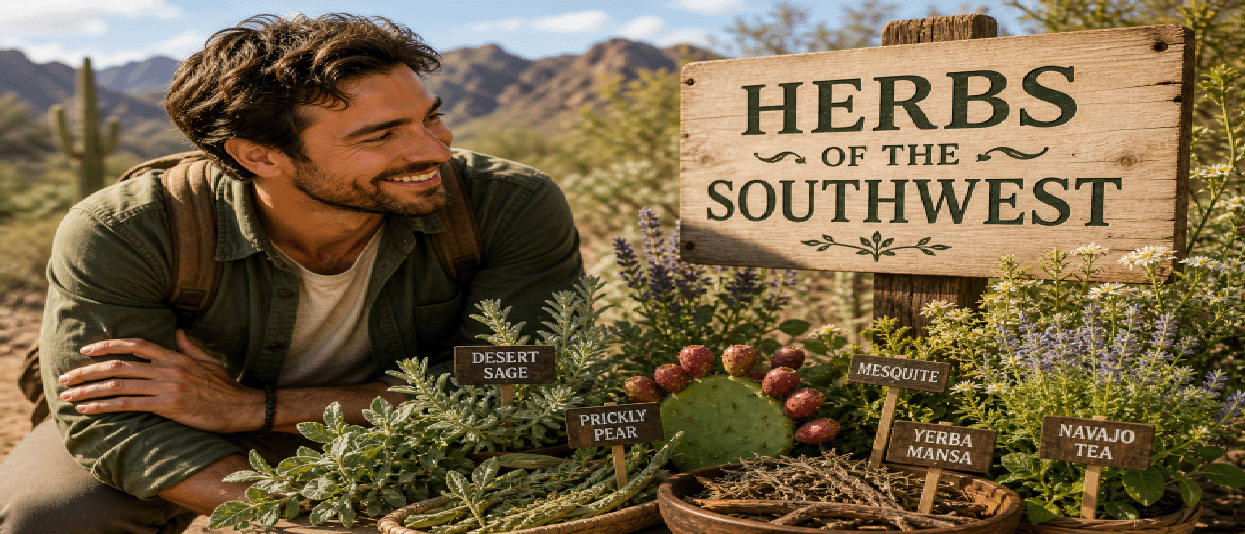
The American Southwest is a land of heat, stone, wind, red earth, and surprisingly powerful plants. In deserts, canyons, mesas, and dry riverbeds, herbs have adapted to survive harsh sunlight, little rain, and extreme temperatures.
These hardy plants are more than beautiful desert survivors. Many Southwest herbs have been used for generations in food, teas, cleansing rituals, traditional wellness practices, and natural home remedies.
This guide explores some of the most well-known herbs of the Southwest, their traditional uses, and how they connect people to the healing wisdom of the desert.
What Makes Southwest Herbs Unique?
Southwest herbs often grow in dry, rugged environments. Because of this, many develop strong aromas, protective oils, deep roots, and concentrated plant compounds.
These qualities make desert herbs especially interesting for herbalists, cooks, gardeners, and natural wellness enthusiasts.
1. Desert Sage
Desert sage is one of the most recognizable plants of the Southwest. Its silvery leaves and earthy aroma have made it important in cleansing, protection, and traditional wellness practices.
Sage is often associated with purification, clarity, and sacred spaces. However, it should be used respectfully, especially when connected to Indigenous traditions.
2. Yerba Mansa
Yerba mansa is a powerful traditional Southwest herb often found near wetland areas, springs, and riverbeds. It has been used historically in teas, washes, and herbal preparations.
Many herbalists value yerba mansa for its strong earthy scent and long history in regional folk medicine.
3. Creosote Bush
Creosote bush, also known as chaparral, is one of the most iconic desert plants. After rain, it releases a strong, fresh desert scent that many people associate with the Southwest.
Although creosote has a long history of traditional use, it must be approached with caution. Internal use can be unsafe and should only be considered with expert guidance.
4. Prickly Pear Cactus
Prickly pear cactus is both food and traditional plant medicine. Its pads, called nopales, and its colorful fruit are used in many Southwest and Mexican dishes.
Prickly pear is known for fiber, hydration, and nutrients. It is often used in juices, jams, salads, and cooked meals.
5. Mesquite
Mesquite trees produce long seed pods that can be dried and ground into naturally sweet flour. Mesquite flour has a nutty, caramel-like flavor and has been used as a traditional desert food source.
Mesquite is valued for its food uses, shade, survival benefits, and deep connection to desert life.
6. Epazote
Epazote is a strong-flavored herb commonly used in Southwestern and Mexican cooking, especially with beans. Its bold taste is earthy, sharp, and unmistakable.
Because epazote can be very potent, it should be used in culinary amounts only and avoided in concentrated forms unless guided by a qualified professional.
7. Mexican Oregano
Mexican oregano is different from Mediterranean oregano. It has a more citrusy, earthy flavor and is commonly used in chili, beans, stews, salsa, and roasted meats.
This herb is a favorite in Southwest kitchens because it adds depth and warmth to bold desert-inspired dishes.
8. Juniper
Juniper grows across many dry and mountainous parts of the Southwest. Its berries, leaves, and wood have been used in traditional practices, cooking, and aromatic rituals.
Juniper is often associated with protection, cleansing, and endurance.
9. Navajo Tea
Navajo tea, also called greenthread, is a traditional herbal tea plant of the Southwest. It produces a mild, earthy tea and has long been enjoyed as a regional beverage.
It is one of the most beloved traditional tea herbs connected to Southwestern culture.
10. Desert Lavender
Desert lavender is an aromatic shrub with fragrant leaves and purple blooms. It attracts pollinators and has been used traditionally in teas and aromatic preparations.
Its scent brings a gentle floral note to the rugged desert landscape.
How Southwest Herbs Are Used
- Cooking: Mexican oregano, epazote, mesquite flour, prickly pear, and nopales
- Tea: Navajo tea, desert lavender, and select traditional herbs
- Aromatics: sage, juniper, creosote, and desert lavender
- Spiritual practices: cleansing, grounding, protection, and seasonal rituals
- Gardening: drought-tolerant landscaping and pollinator gardens
Important Safety Note
Some Southwest herbs are powerful and may not be safe for everyone. Certain plants can interact with medications, pregnancy, liver conditions, allergies, or existing health issues. Never ingest wild plants unless you are 100% certain of their identity and safety.
When exploring desert herbs, use trusted sources, buy from reputable suppliers, and consult a qualified herbalist or healthcare professional before using herbs medicinally.
Final Thoughts
The herbs of the Southwest tell a story of survival, tradition, flavor, and sacred connection to the land. From desert sage and yerba mansa to mesquite, prickly pear, Mexican oregano, and Navajo tea, these plants offer a unique window into the natural wisdom of the desert.
Whether you are interested in herbal remedies, desert cooking, spiritual cleansing, or drought-tolerant gardening, Southwest herbs bring beauty, strength, and ancient plant knowledge into modern life.
Herb Related Articles