

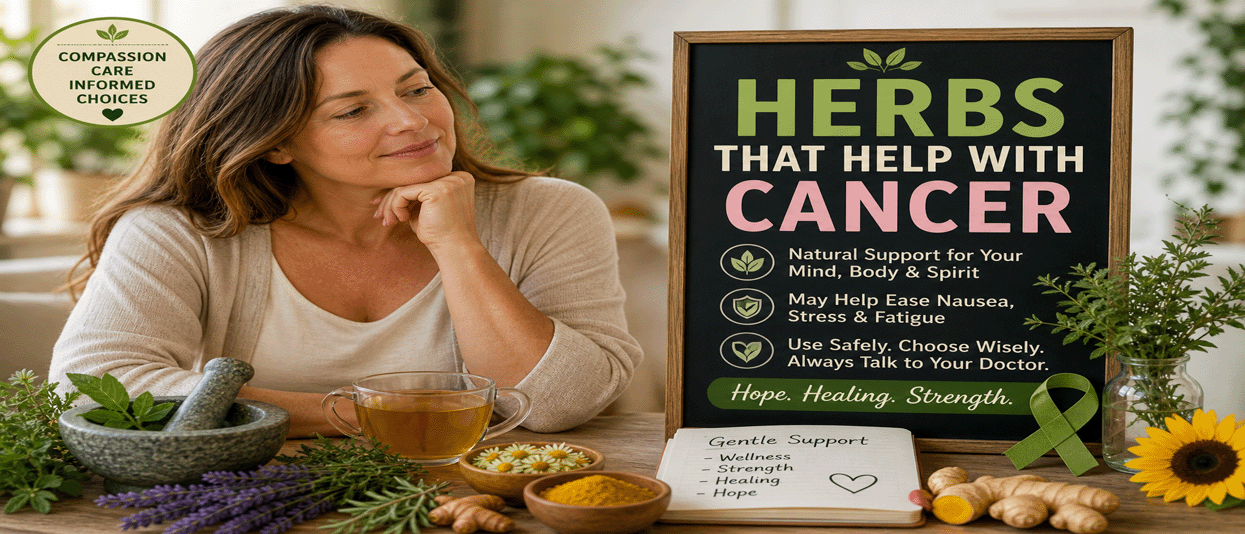
Important: No herb has been proven to cure cancer. Herbs and supplements can interact with chemotherapy, radiation, surgery, immunotherapy, and prescription medications. Always talk with your oncology team before using herbs medicinally.
Many people search for herbs that help with cancer because they want comfort, strength, fewer side effects, or a more natural way to support the body during treatment. That desire is understandable. But cancer care is one area where herbs must be used with extra caution.
According to the National Cancer Institute, herbs and dietary supplements can change how cancer drugs are absorbed, metabolized, or removed from the body. Memorial Sloan Kettering also warns that people undergoing cancer treatment should not take dietary supplements unless prescribed by a doctor or used in an approved clinical trial.
This guide focuses on herbs that may support comfort and wellness—not herbs that claim to cure cancer.
Can Herbs Help With Cancer?
Herbs may help some cancer patients manage treatment-related discomforts such as nausea, appetite changes, sleep problems, stress, inflammation, and digestive upset. However, herbs should be viewed as supportive care, not cancer treatment.
The American Cancer Society states that no supplement has been proven effective as the sole treatment or cure for cancer. A safe integrative plan should include your cancer care team, your medications, your diagnosis, and your treatment schedule.
Herbs That May Support Cancer Patients
1. Ginger for Nausea Support
Ginger is often used for nausea and digestive discomfort. Some cancer patients use ginger tea, ginger candies, or small amounts of fresh ginger to help settle the stomach.
Use caution: Ginger may affect bleeding risk in high doses, especially before surgery or with blood thinners.
2. Turmeric for Inflammation Support
Turmeric: Contains the active compound curcumin, which has been studied for its ability to reduce inflammation and inhibit tumor growth in breast, lung, and colorectal cancers. Some preliminary cancer-related studies suggest potential quality-of-life benefits, but evidence is not strong enough to use turmeric as cancer treatment.
Use caution: Turmeric supplements may interact with medications and may not be appropriate before surgery or with certain treatments.
3. Peppermint for Digestive Comfort
Peppermint tea may help some people with mild digestive discomfort, bloating, or queasiness.
Use caution: Peppermint may worsen reflux or heartburn in some people.
4. Chamomile for Relaxation
Chamomile tea is commonly used for relaxation and sleep routines. For some patients, it may provide a calming nighttime ritual.
Use caution: Chamomile may interact with blood thinners and may trigger allergic reactions in people sensitive to ragweed-family plants.
5. Green Tea for Antioxidants
Green tea contains catechins, which are antioxidant plant compounds. Some studies have explored green tea in relation to cancer risk and recurrence, but findings remain mixed.
Use caution: Green tea extracts are much stronger than brewed tea and may interact with treatments or affect the liver.
6. Milk Thistle for Liver Support
Milk thistle is commonly used for liver-related support. Memorial Sloan Kettering notes that it has been used for liver problems, but not all claimed uses are proven.
Use caution: Cancer patients should not take milk thistle supplements without oncology approval because it may affect how drugs are processed.
7. Cayenne Pepper: Contains capsaicin, which is being researched for its potential to induce apoptosis (programmed cell death) in cancer cells.
8. Oregano and Thyme: Both contain carvacrol, a molecule that may help slow the spread of cancer cells.
9. Rosemary: Rich in carnosic and rosmarinic acids, which act as strong antioxidants to protect cells from damage.
Supportive and Alternative Herbs
Some herbs are used primarily for immune support or symptom management during conventional treatment:
- Astragalus: Used in traditional medicine to boost the immune system and potentially reduce the side effects of certain chemotherapy drugs.
- Ginseng: Often used to help manage cancer-related fatigue and improve general well-being during treatment.
- Echinacea: Known for its immune-enhancing effects, it may help patients handle the immune-weakening effects of chemotherapy and radiation.
- Mistletoe Extract: Used in some integrative therapies to improve quality of life and reduce fatigue and nausea.
Herbs and Supplements Cancer Patients Should Be Careful With
Some herbs may reduce treatment effectiveness, increase bleeding risk, stress the liver, or interact with cancer medications.
- St. John’s wort: May make certain cancer drugs less effective.
- Kava: Linked to potential liver damage.
- High-dose green tea extract: May affect the liver and treatment response.
- Garlic supplements: May increase bleeding risk in high doses.
- Ginkgo biloba: May increase bleeding risk.
- Essiac tea: Often marketed for cancer, but human evidence is not conclusive.
- Apricot kernels/laetrile/B17: Not proven to treat cancer and may cause cyanide poisoning.
Questions to Ask Your Oncology Team
- Is this herb safe with my specific cancer treatment?
- Should I stop this herb before surgery or radiation?
- Could this herb affect bleeding, liver function, or immune response?
- Is brewed tea safer than capsules or extracts?
- What dose, if any, is appropriate for me?
Safer Ways to Use Herbs During Cancer Care
- Use culinary amounts in food unless your doctor says otherwise.
- Avoid concentrated extracts unless approved by your care team.
- Keep a written list of all herbs, vitamins, and supplements.
- Bring supplement bottles to appointments.
- Stop anything your oncology team says could interfere with treatment.
Final Thoughts
Herbs can be comforting, nourishing, and meaningful during cancer care, but they must be used wisely. Ginger tea, chamomile, peppermint, turmeric in food, and other gentle herbs may support comfort for some people, but supplements are not harmless just because they are natural.
The safest path is simple: never use herbs as a replacement for cancer treatment, never trust “miracle cure” claims, and always ask your oncology team before using herbal supplements.
Herb Related Articles