

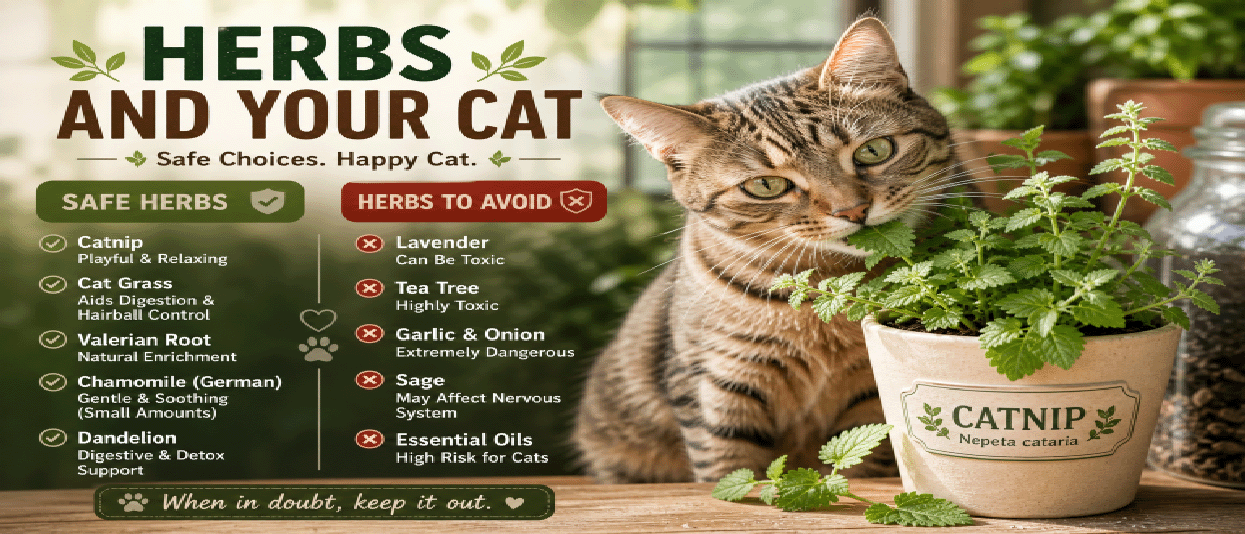
Herbs may be natural—but for cats, “natural” does not always mean safe.
Cats process plants very differently than humans. Their liver lacks certain enzymes needed to break down compounds found in many herbs. That means some herbs that are perfectly safe for people can be dangerous—even toxic—for cats.
If you love herbal living and also share your home with a cat, this guide will help you understand which herbs are safe, which ones to avoid, and how to create a pet-friendly herbal environment.
Why Cats React Differently to Herbs
Cats are obligate carnivores, meaning their bodies are designed primarily for meat-based nutrition. Unlike humans or even dogs, cats lack key liver enzymes that help break down plant oils, phenols, and essential compounds.
This is why certain herbs—especially concentrated oils—can quickly overwhelm a cat’s system.
Herbs That Are Generally Safe for Cats
Some herbs are considered safe in small amounts and may even provide enrichment or mild wellness support.
Catnip
The most famous cat-friendly herb. Catnip can stimulate playfulness or relaxation depending on the cat.
Cat Grass (Wheatgrass, Barley Grass)
Helps with digestion and may assist cats in naturally clearing hairballs.
Valerian Root
Can have an energizing or calming effect similar to catnip for some cats.
Chamomile (German Chamomile Only, Small Amounts)
May be soothing in very mild forms, but should be used cautiously and not in concentrated oils.
Dandelion (Leaves & Roots)
Occasionally used in pet-safe herbal blends for digestion and mild detox support.
Herbs That Are Toxic or Dangerous for Cats
These herbs should be avoided in your home, garden, or especially in oils, sprays, or supplements around cats.
Lavender
While calming for humans, lavender contains compounds that can be toxic to cats, especially in essential oil form.
Tea Tree (Melaleuca)
Highly toxic. Even small exposures can lead to serious poisoning symptoms.
Mint (Certain Varieties)
While mild exposure may not always be harmful, concentrated forms or certain species can cause digestive upset.
Garlic and Onion (All Allium Family)
Extremely toxic to cats. These can damage red blood cells and lead to serious health issues.
Sage
Contains compounds that may negatively affect a cat’s nervous system if ingested.
Rosemary (Large Amounts)
Small exposure is sometimes tolerated, but ingestion in larger amounts can lead to digestive problems.
Essential Oils: A Major Risk for Cats
Essential oils are one of the biggest hidden dangers. Because they are highly concentrated, even diffused oils can affect cats through inhalation or skin contact.
Oils to strictly avoid around cats include:
- Tea tree oil
- Eucalyptus oil
- Peppermint oil
- Lavender oil
- Citrus oils
Always keep diffusers out of reach and ensure proper ventilation if used at all.
Signs of Herbal Toxicity in Cats
If your cat has been exposed to a harmful herb, watch for these symptoms:
- Drooling or vomiting
- Lethargy or weakness
- Tremors or shaking
- Difficulty breathing
- Loss of coordination
If you notice any of these signs, contact a veterinarian immediately.
How to Create a Cat-Safe Herbal Home
- Keep herbs and plants out of reach unless verified safe
- Avoid using essential oil diffusers in closed spaces
- Grow cat-safe herbs like catnip or cat grass for enrichment
- Never give herbal supplements without veterinary guidance
- Check labels on sprays, cleaners, and natural products
Final Thoughts
Living a natural, herbal lifestyle doesn’t mean putting your pets at risk. With a little knowledge, you can enjoy herbs while keeping your cat safe and healthy.
When in doubt, always choose caution. Your cat depends on you to create a safe environment—and understanding which herbs are safe and toxic is one of the most important steps you can take.
Herb Related Articles